Drained
*Content warning: this post contains pictures of my chest and drains after surgery*
I had been told by several people that I would hate my drains. I was optimistic at first. After all, the surgery had gone so well, maybe the drains would be better than expected too? I was wrong. So wrong. They were plastic pieces of hell worming themselves into my body.
The mastectomy surgery involved removal of a large amount of breast tissue, as well as the nipples in my case. When this much tissue is removed, there is empty space underneath the skin where drainage from surrounding tissue can build up. The drains make sure that extra fluid, blood, and small pieces of tissue are removed from your body. With such a big surgery, your body can't break all that down and absorb it faster than it is made. If all that gunk were to sit around under your skin, it could slow down healing and cause a major infection.
The type of drain my surgeon used was called a Jackson-Pratt drain, or J-P drain for short. It looks like a clear plastic grenade connected to a long clear plastic tube. I had four drains total. The tubes were inserted through small incisions on my sides, a couple of inches below where my breasts had been. There was a small stitch in the skin where each drain came out, holding the tube in place so it wouldn't be pulled out of my skin. Before leaving the hospital, I was given two matching fabric pouches. Each one was big enough to hold two drain bulbs, and was attached to a strap I would tie around my waist. The pouches were held close enough to my body that they weren't obvious when I wore a baggy shirt.


It was ok for the drains and drain sites to get wet, but I was told not to scrub at the areas and not to pick at the small scabs that occasionally formed where the drains went into the skin. While the drains were in, my husband helped me shower. I was weak, in pain, and always in fear of tugging on the tubes. I sat on a shower stool while he did all the soaping up, lathering, and rinsing. Each drain bulb had a loop so we were sent home with a tube to slide through each loop and tie around my neck. Instead, I used a waterproof pouch that I had placed on my amazon wish list. I still tied it around my neck, but I found it was a little easier to handle than the tubing.
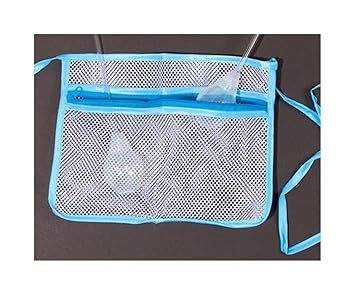 |
| Water proof pouch to hold drains, found on amazon.com |
We
were instructed to empty the bulbs twice a day. I would sit on the
toilet in our master bathroom, and my husband helped take the drains
out of the pouches, empty them, and put them back in the pouches. To
keep clean and reduce the risk of infection, we made sure our hands
were freshly washed and dried off on a clean towel. We had stocked up
on extra hand towels just for this. My husband would use just his
hand or a piece of gauze to pinch the tubing together while he moved
down towards the bulb. This helped remove some of the fluid and
tissue stuck in the tube to prevent a clot. The bulb had a plug,
which would pull open so we could pour the drainage into measuring
cups provided by the hospital. Each bulb was numbered 1 through 4,
and we had to track how much fluid came out with each emptying. Over
time, this would guide when each drain was ready to come out (once it
had been in for 2-3 weeks). The bulb had to be squeezed before the
plug was replaced, which formed a vacuum that would help pull the
fluid from the surgery space. The fluid that came out looked like
Hawaiian punch at first, then it became more of a pale red or pink
color. Every now and then there would be a big piece of tissue
draining out. As a veterinarian with a sense of morbid curiosity, I
found it fascinating, but it might be a little weird to other people.
It is normal and natural though, so there is no need to be scared or
grossed out.
At first, the skin holes were covered with a large piece of adhesive plastic. This helped keep the tubes from being pulled, but there was a small amount of fluid drainage from the skin holes which got caught in the tape. After a week, I started to have a skin reaction to the tape. Itchy little red bumps appeared all over my belly. At a post-surgery appointment, my doctor removed the tape. It was such a relief. The itching improved, and the skin bumps disappeared within a few days (leaving the tape on was a risk for the bumps to lead to infection). I wasn't relieved for very long though. Without the tape, it was much easier for the tubes, scabs, or the stitches to get caught on things, which led to tugging, which was always accompanied by pain.

We had a nurse make a couple of at-home visits during my recovery. She gave us some gauze and tape that we could use to help cover the sites and stabilize the drains. We were also given a wet gel material to cut into small pieces to put over the most irritated areas. This gel allowed for moisture and protection from rubbing, which helped a lot with comfort. We usually changed the gauze once a day.
Once the drainage was consistently below 10 milliliters, two of the drains were removed, and the last two were removed a week later because the amount of drainage stayed low. They were removed by my doctors at post-surgery visits. The scabs were gently wiped off, and stitches were cut then pulled from the skin. Then my doctor braced the tube, had me take a deep breath, and she pulled. I could feel the drain curling and snaking underneath the skin of my chest. Although it came out smoothly, it pulled on my tissue and it hurt. For ten minutes afterwards, I could still feel the space in the tissue where the drain had been. Despite that momentary pain, removal of the drains was a relief. I was incredibly happy even when just the first two were gone. I felt lighter, it was easier to move around, and there was less pain and discomfort. Once all the drains were gone, I was able to start on exercises to regain my arm strength and mobility.
If you need more information on drains and what you may need after your surgery, ask your doctor. My plastic surgeon has a website that includes videos for drain care. There are also many YouTube videos that help to show how the drains work and are emptied.


Comments
Post a Comment